To act well, a system needs a model of what’s happening—and a way to revise it.
The free energy principle describes adaptive systems in terms of minimising variational free energy, a mathematical bound on surprise. Active inference applies this framework to belief updating and action.
Update beliefs.
Use observations to revise a model of the situation. Variational free energy provides an objective for this inference.
Choose actions.
Evaluate possible actions using expected free energy, considering both information gain and preferred outcomes.
For Norlo, the practical idea is clear: use evidence to understand a case, then recommend what is useful to learn or do next.
Read the research +
Friston et al. — Active inference and epistemic valueSajid et al. — Active inference, Bayesian optimal design, and expected utilityThe papers explain the theoretical framework. They do not establish Norlo product performance or institutional endorsement.
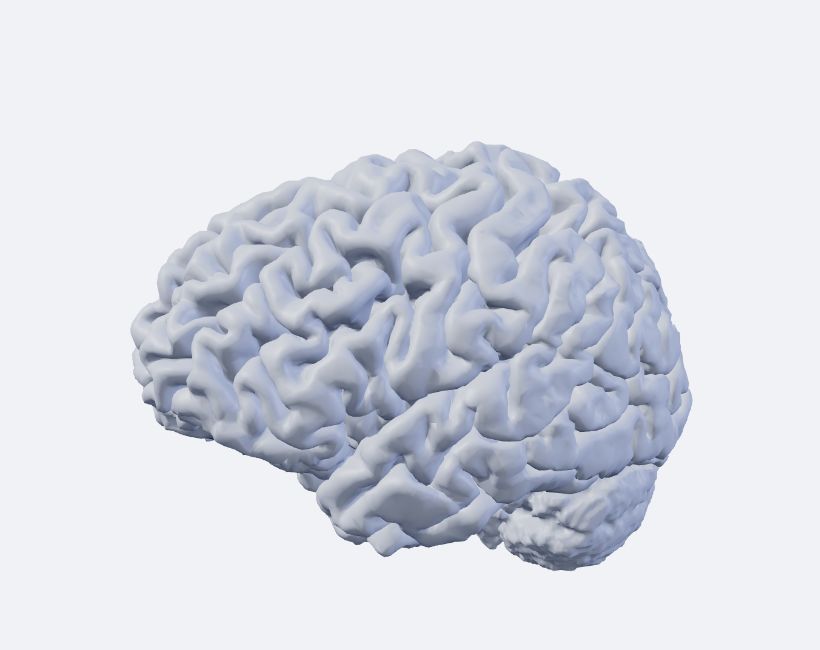
The brain is a visual metaphor for the reasoning loop. Highlights are illustrative and do not map Norlo functions to anatomical regions.